Permissions
The boundaries of interface, contact, system, and mechanic. What the videogame allows, requires, and forbids.
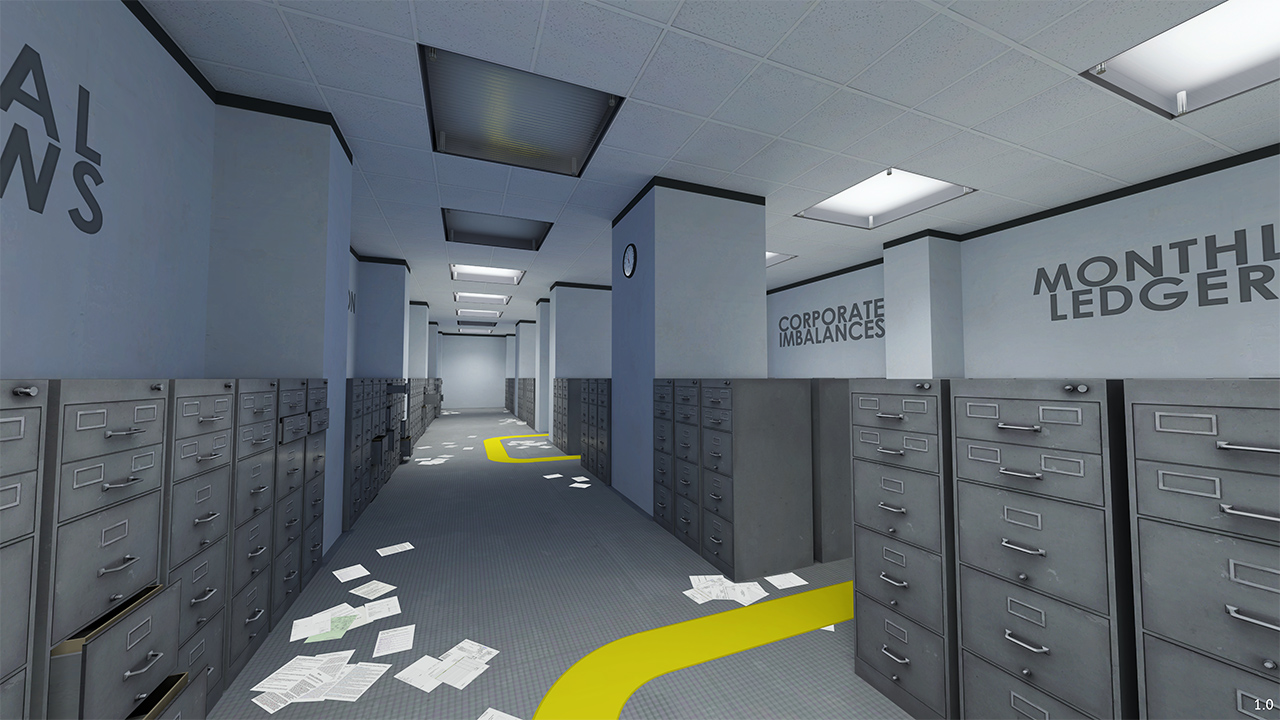
What Permissions Are
Permissions are the boundaries of the experience. They define what's allowed, what's required, and what's forbidden within the videogame's systems.
Every videogame has Permissions, whether the designers intended them or not. Some are explicit (you cannot go through this wall). Some are implicit (you would never think to try). Some are designed. Some are accidents. All of them shape the experience.
Three Types of Permissions
Allowed
What the videogame lets you do. The possibility space. Can you jump? Can you talk to NPCs? Can you save anywhere?
Required
What the videogame makes you do. The demands of progression. Must you defeat the boss? Must you watch the cutscene? Must you wait for the timer?
Forbidden
What the videogame prevents you from doing. The boundaries. Cannot harm children NPCs. Cannot skip the tutorial. Cannot return to the previous area.
Discovering Permissions
We often don't know the Permissions preemptively. We discover them through play, through the 4 A's. It's like reaching out and feeling for feedback in the dark.
The Action shows us what we can do. The Art signals what might be possible. The Arc reveals what's required to progress. The Atmosphere hints at what kind of experience this is. Through all of these, we come to understand the limits of the experience, the Permissions.
Sometimes we know the Permissions before playing: from genre conventions, from marketing, from other players. But even then, the explicit boundaries are felt out through the Gesture itself.
Permissions and Meaning
Permissions carry meaning. What a videogame allows, requires, and forbids communicates values, priorities, and worldview.
A videogame that forbids killing communicates something different than one where it is essential for progression. A videogame that allows broad nonlinear exploration communicates different Permissions than one of linear level progression. These aren't neutral technical decisions. They are intentional for one of these affects or another.
Exercise
Pick a videogame. List:
- 3 things the videogame allows (but doesn't require)
- 3 things the videogame requires
- 3 things the videogame forbids
For each: How did you discover this Permission? Through what Action, Art, Arc, or Atmosphere?
Why Teach Permissions
Students tend to focus on what is being created (features, content) but don't directly address what they are avoiding or removing from the preemptively expected experience of what they are creating, not acknowledging the constraining in the space. To our mind this is tantamount to ignoring negative space as a compositional tool. In this, Permissions help to establish the frame of the videogame's staging and intentionality. You are defining the space of possibilities.
Teaching Sequence
- Start with "Forbidden." It's often invisible but powerful. Ask: what can't you do in your videogame?
- Move to "Required." What must you do to progress? What has no alternative?
- End with "Allowed." This is the space between the previous two, the Required and the Forbidden, this is the space of play and agency.
The "Permissions Remix" Exercise
Have students take a videogame and change one Permission:
- What if Mario couldn't jump? (Forbidden something that was Allowed)
- What if Dark Souls let you pause? (Allowed something that was Forbidden)
- What if Tetris didn't require pieces to fall? (Removed a Requirement)
Discuss: How does this single change affect the whole experience?
Common Pitfalls
"More Allowed = better"
Students may assume more player freedom is always more fun/good. Generally this is not true and, like in any creative space, only constraints create meaning. A videogame that allows everything requires nothing and often feels vapid.
"Required = bad"
Students may feel Requirements are limitations to avoid. But Requirements are how videogames create shared experiences. Without them, there's no guarantee any two players experience the same thing.
Assessment
Have students write a "Permissions document" for a videogame they're designing. Look for: Do they articulate all three types? Do they explain why each Permission exists?
Permissions and Agency
Agency exists in the space between Required and Forbidden. If everything is Required, there's no agency. If nothing is Forbidden, agency may feel meaningless (there are no stakes to making one decision over another).
The art of Permission design is balancing constraints: enough Required and Forbidden to give choices weight, enough Allowed to give players room to express themselves.
Permissions and the 4 A's
Permissions are not separate from the Gesture. They are discovered through it. The 4 A's are how we come to understand what's allowed, required, and forbidden.
This means Permissions are not purely abstract rules. They are felt, encountered, tested. A Permission you never bump against might as well not exist. A Permission you discover through play becomes part of the experience.